

What is Laparoscopy Surgery?
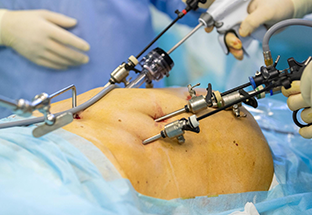
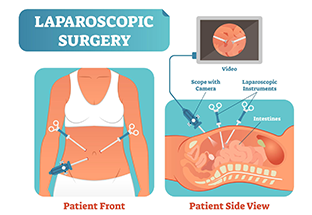
Laparoscopy is a surgical procedure in which the surgeon makes small cuts (usually 0.5–1 cm) and inserts:
The camera shows inside images on a monitor, allowing surgery without a large incision.
Laparoscopic surgery, also called minimally invasive surgery (MIS), bandaid surgery, or keyhole surgery, is a modern surgical technique. There are a number of advantages to the patient with laparoscopic surgery versus the more common, open procedure. These include reduced pain due to smaller incisions, reduced hemorrhaging, and shorter recovery time. The key element is the use of a laparoscope, a long fiber optic cable system which allows viewing of the affected area by snaking the cable from a more distant but more easily accessible location.
Laparoscopic surgery includes operations within the abdominal or pelvic cavities, whereas keyhole surgery performed on the thoracic or chest cavity is called thoracoscopic surgery. Specific surgical instruments used in laparoscopic surgery include forceps, scissors, probes, dissectors, hooks, and retractors. Laparoscopic and thoracoscopic surgery belong to the broader field of endoscopy.
Laparoscopy is keyhole surgery used to examine or operate on the interior of the abdominal or pelvic cavities. It is performed under general anesthesia, usually by a surgeon or gynecologist (women’s health specialist).
LAPAROSCOPIC SURGERY, also called MINIMALLY INVASIVE SURGERY (MIS), BANDAID SURGERY, or KEYHOLE SURGERY.